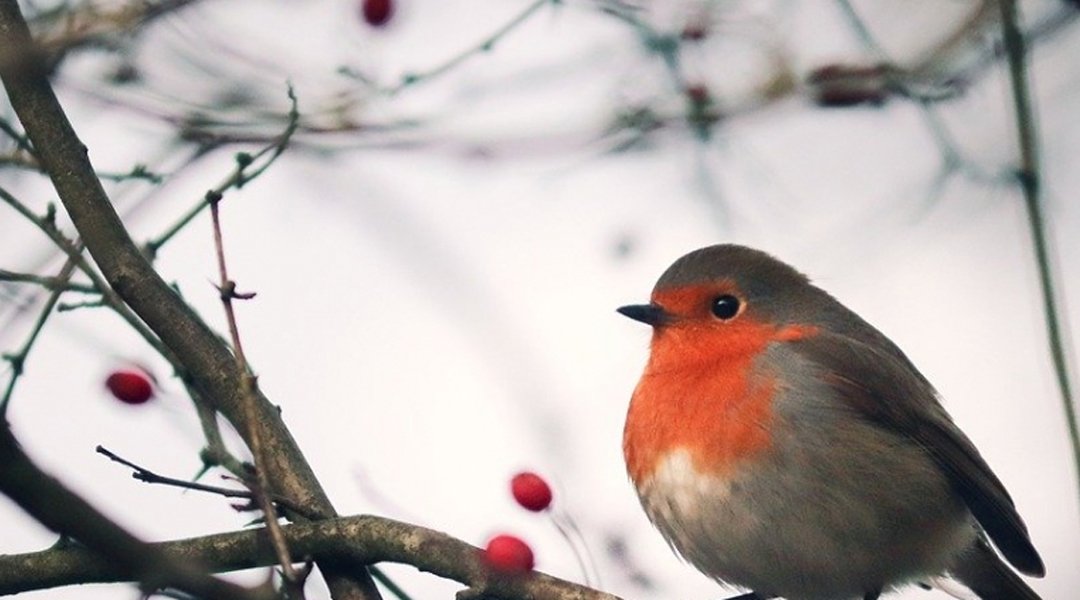
The winter season for the gardener is a time of rest, when the garden is most often viewed from the windows of the house, making plans for the upcoming season. However, let’s not forget about our plants, it is worth looking after them also in winter. Heavy snowfall will give us the most work – we will have to remove it from driveways and garden paths, as well as shake off tree branches. We regularly check the condition of winter covers. Let’s also remember about the birds, counting on our help in the hardest months for them.
Check the condition of winter covers
We regularly check the winter protection of frost-sensitive plants, whether they have slipped due to strong wind or snow. In the event of severe frosts, it is worth covering the plants with an additional layer of straw, dressing or agrotextile. In severe winters, hungry hares and even deer may bite into gardens located in the vicinity of a forest or fields, and they will gnaw on plants. If our fence is not a tight barrier against these animals, it is worth protecting the trunks of young trees. Special plastic casings are used for this purpose, although we may as well tie them with paper or agrotextile. Such a cover should reach at least 80 centimeters high.
Shake snow from the branches
Snow quilts, covering beds and ground cover plants are great additional insulation against frost. In contrast, snow cushions on trees and higher bushes, although they are a beautiful winter view, can be dangerous for plants. Large caps, especially wet snow, place a heavy load on the branches, under which they may break or deform. Therefore, after heavy snowfall, you should shake off the snow caps from the branches. If under the weight of snow the tree branch has broken, you should immediately level the wound and protect it with gardening ointment, available at any gardening store.
Evergreen plants
During periods of thaw, as soon as the ground slightly thaws, we water coniferous and evergreen plants. This is important because these plants also in winter evaporate water from the surface of the leaves, while with frozen soil they can not take it from the soil. Therefore, periods of thaw are good times to make up for water shortages in tissues.
Remove snow from surfaces
We are confining ourselves to mechanical methods by removing snow from garden surfaces. It is best to do it with a special shovel or snow shovel, with larger amounts of paths we can use a mechanical snowblower. Let’s avoid using chemicals for this purpose, such as de-icing salts, because it, along with melting snow, penetrates the soil, destroying its structure and disrupting biodiversity. Plants in saline soil have difficulty in collecting water, grow less, have smaller growths and bloom less profusely, are also more susceptible to diseases and pathogens, and in extreme cases even dry up. In addition, salt can cause discoloration or other damage to the surface material. Do not use sharp tools to remove snow from garden surfaces that could scratch it. For the same reason, do not use sharp tools for removing ice that lies on them. We should not allow a layer of ice to form on the surfaces – we just have to clear it of snow as soon as the snow falls before the household traces it. However, if a layer of ice has already formed on the path, we can sprinkle it with sand.
We must remember the provision obliging property owners to remove snow and ice from public walkways, directly adjacent to the property border. The owner who does not comply with this provision may be fined or charged with the costs of removing snow from the pavement by the municipal services. When clearing the garden, do not throw snow from paths to the lawn. Under the snowdrifts, the grass dies to the nipple of oxygen deprivation, while during the thaw, stagnant water causes its roots to rot. An excessively thick cushion of snow at rebates is also harmful to other plants (although snow perfectly insulates them against frost), so with very heavy rainfall, do not shovel snow also at discounts. We can also commission the removal of excess snow to municipal services, of course for a fee.
Remember about birds
In winter, and especially during frosty and snowy periods, birds have difficulty finding enough food. Let’s help them survive the winter. However, in order not to cause more harm than good, let’s get acquainted with the basic principles of correct and responsible feeding of birds.
Always pour food in the same place, because the birds quickly get used to the places where they find food. It is best to feed the birds in the feeder, positioned so as to impede access to predators (mainly cats). The roofed feeder will also protect food and feasting birds from snow or rain. Feed the birds consistently and regularly – if we started to do it in the fall, it is necessary to continue feeding until the birds can easily find food themselves (usually by the end of April or beginning of May). Regularly clean the feeder, removing the remains of uneaten food and bird droppings. We can give birds: various seeds, cereals, nuts (not salted!), Cereals, cereals, rice, dried fruit (but without sugar!) and fresh fruit, as well as bacon, lard (without salt and other spices!), small pieces unsalted meat. At the same time, foods containing a lot of water are served only during frost-free periods. We categorically avoid giving birds: salted products, as well as other seasoned (also sweetened) products, spoiled products, moldy rotten or rancid, as well as fresh bread (we can occasionally provide birds with bread, but dried and crumbled). In addition to food, let’s also ensure that the birds have constant access to freezing water, because they are not able to satisfy their thirst, e.g. with snow.
At the end of winter, make cuts forming trees and shrubs
The end of winter is the time when we can make sanitary and forming cuts for most trees and shrubs that are going through a period of winter rest (i.e. dropping leaves on the winter). If there is no severe frost, we can start these treatments in the second half of February. Dormant plants will not lose their juice, and at low temperatures the risk of plant infection with diseases is significantly reduced. During this period, do not prune evergreen species, frost-sensitive plants (e.g. walnut, apricot, peach, quince), as well as shrubs blooming on last year’s shoots (e.g. forsythia, tonsils, lilacs, quinces, species of meadowsweet and spring willow).
In addition to cutting, aimed at a nice formation of plants, we also make sanitary cuts – we remove diseased, damaged and broken branches, and we also x-ray the crown (we remove shoots that are excessively thickened and intersecting). At the end of winter, we can also rejuvenate older, strongly overgrown bushes – we remove the oldest shoots completely, while the others are shortened by 2/3.